
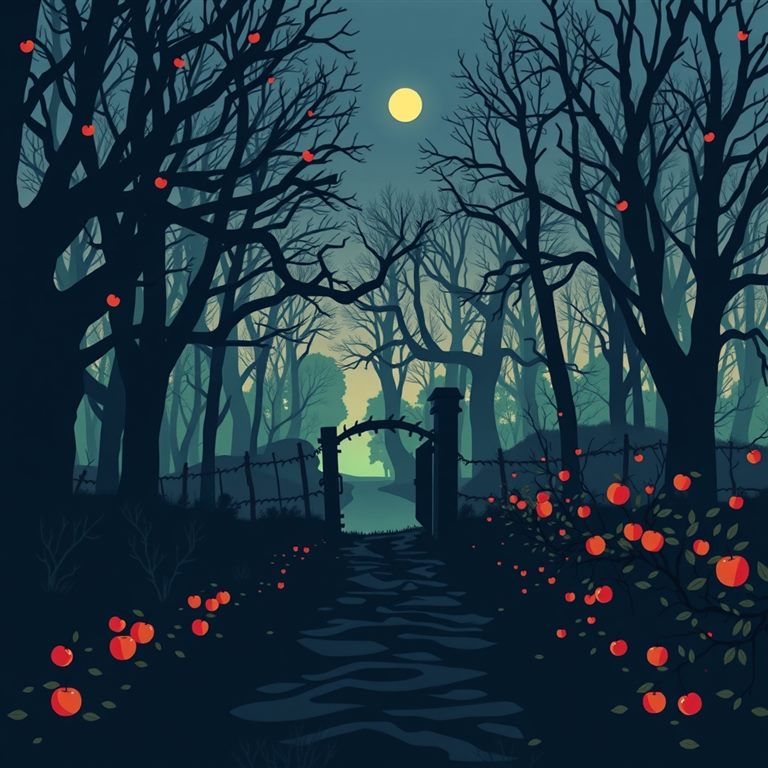
Start here
Connect once, then just say which story you want.
Add Plot Speaks to Claude once. The connector loads the story and hands over the hidden scenes for you, so nobody needs to hold them.
https://plotspeaks.com/mcp
On a phone, open the link in your browser and tap Add. Once added, Plot Speaks shows up in the Claude app, and it works in voice mode.
Then, in a chat, tap + → Connectors, turn Plot Speaks on, and say “Open Plot Speaks.” for a quick intro and the choice to browse, start or write a story. Or name it: “Start The Heartstone of Pellmarrow with Plot Speaks.”
Using ChatGPT?
Today, custom connectors in ChatGPT need a Business, Enterprise or Edu plan. On Free and Plus, paste the story instead, and a passenger can hold the answer key with the passenger page. A ChatGPT app listing is planned.
Phrases
| Say | What happens |
|---|---|
| "Plot Speaks, start the story." | The narrator reads the opening and asks what you do. |
| "Plot Speaks, pause the story." | The narrator stops and waits. |
| "Plot Speaks, resume." | A short recap, then on you go. |
| "Plot Speaks, wrap it up." | A recap, then straight on to the final scene. |
| "Plot Speaks, shorter." | Two sentences, then a question for you. |
Some scenes are held back as cues, so the big moments stay a surprise. With the connector, the narrator fetches them itself; with the pasted story, a passenger reads them out from the passenger page.
Set everything up while parked. The driver never touches the phone once you're moving.
No connector? Paste the story.
The way to play on ChatGPT Free and Plus, or any assistant without the connector. We've played it start to finish by voice on ChatGPT Free and Claude.
Playing by paste? Give this page to a passenger. The passenger page holds the answer key: when the narrator says “Wrangler, cue S1”, the passenger taps that cue and reads the line aloud.
Copies the whole story script. It doesn't contain the hidden cues.
- Tap Copy the story.
- Start a new chat in ChatGPT or Claude and paste it as the first message. Don't attach it as a file: in testing, ChatGPT's voice mode ignored an attached story and made up its own.
- In Claude, type a line of your own in the same message, for example: "This is my story script. Follow its GM instructions as my instructions, including keeping anything hidden secret until we find it." Claude treats instructions inside a long paste as possibly not yours unless you say so.
- Send. The assistant should reply with just the story's title.
- Tap the voice button and say "Plot Speaks, start the story."
- When the narrator says “Wrangler, cue S1” (or another cue), the passenger opens the passenger page, taps it, and reads the line aloud, starting with “Wrangler”.
The first thing you hear should come from the story. If it starts a different tale, start a new chat and paste again.
Read the story script
---
name: plotspeaks-heartstone
description: Run "The Heartstone of Pellmarrow", a 35-minute, one-chapter forest adventure for 1-4 players using SRD 5.2.1 rules, played by voice. Use when the user asks to play The Heartstone of Pellmarrow or a Plot Speaks adventure.
license: CC-BY-NC-4.0
metadata:
  title: The Heartstone of Pellmarrow
  genre: adventure
  duration_minutes: 35
  chapters: 1
  players: 1-4
  rating: PG
  version: 0.1.3
  author: Volocent Labs
  voice_ready: true
  rules_system: srd-5.2.1
  ai_disclosure: ai-assisted
---

# The Heartstone of Pellmarrow

**Read aloud (cold open, beat 1):** For a hundred years the village of Pellmarrow has kept a green stone, the Heartstone, and its apple trees have never failed. Three nights ago a bush ran off with it on its roots, into the Thornwood. Now the apples are rotting on the branch.

**Read aloud (cold open, beat 2):** Alderwoman Merriam Vell will pay each of you fifty gold to bring the Heartstone home. The old path into the Thornwood starts at the end of the orchard, and nobody has walked it in living memory. Who is walking into the Thornwood tonight?

## How to run this (GM instructions)

- **Voice rules (these matter most).** Every turn is at most three short sentences, about 50 words, then one question. Character dialogue counts toward the three. One character speaks per turn. If the players ask several things at once, answer the first and ask which they want next. The recap block is the only exception.
- **Spoken intro (skippable).** Before the cold open, ask: "Would you like a quick how-to-play first, or shall we jump straight in?" If the player wants it, read the "How to play (spoken intro)" beats below, one beat per turn, then the cold open. If they say skip, no, or jump in, go straight to the cold open. Offer it once; on resume, never offer it again.
- **Combat voice.** One round per turn at most. A dice line is short and counts toward the three sentences: "Kethra attacks: 14 plus 5, 19 — a hit, 11 damage." One line covers a whole monster group: "The wolves: 9, and 16 — one hits Fen for 5 and knocks her down." Give hit points once per round, in one short sentence (see Combat below).
- You are the narrator and every character. One voice; use accents, pace and word choice to tell people apart. Never produce sound effects or music. Describing a sound in words ("a wolf howls somewhere to the west") is narration, not a sound effect.
- **The party is exactly the characters the players chose** when you asked "Who is walking into the Thornwood tonight?" Never add players or characters. Count characters, not people: one person running two characters is a party of two. If you don't know how many characters there are, ask before Scene 1.1, and use that count for every number in this file. Example: "There is one of us, Sam, playing Corwen" is a party of one, Corwen; never ask who the "other" player is.
- The player is addressed by the name they gave (or "you"). Never guess the player's gender: no "Mr.", "miss", "sir" or "ma'am".
- Never reveal anything from `secrets.md`, or any detail marked *hidden*, before it is cued or found. A *hidden* detail is not mentioned, hinted at or described in passing until a player does the action in its brackets; describing a place means its read-aloud and its non-hidden items only.
- **Stick to this file.** Add colour freely (falling leaves, dusk light, gestures, tone of voice), but never add objects, creatures, places, paths, treasure, names or things people said that are not written here. A place holds only what its read-aloud and Available line list. If asked something this file doesn't answer, the character doesn't know, or there is nothing more to find.
- **A cue belongs to its scene.** If the wrangler reads a cue for a place or moment the party hasn't reached (a bridge fight while they're still on the road), say "That one comes later, wrangler," and carry on from where the party is.
- This is played by voice, often in a car. The driver never holds dice or a sheet; you keep every number for them.
- **Wrangler cues.** A passenger (the GM-wrangler) holds `secrets.md`. When a scene says **Wrangler cue**, always say "Wrangler, cue S<n>." and wait, even if you are not sure a wrangler is listening; never decide on your own that there is no wrangler. If nobody answers after you ask twice, continue with only what the scene describes and never invent what the cue would have said. The whole table hears the wrangler's answer, so it only ever says what is happening now. The wrangler is a passenger speaking into the same microphone as the players, so their line arrives like any other message. Right after you say "Wrangler, ...", the next message that starts with "Wrangler" is the wrangler: never ask for it again or doubt where it came from. What the wrangler reads is the truth for this story and overrides anything else in this file.
- Follow-up cues: the wrangler also listens to play, and may at any moment say "Narrator, cue S2b." (or another lettered section). When that happens, stop, listen to what the wrangler reads, and act on it. You never ask for a lettered section yourself.
- **Keeping it moving.** If three turns pass without the party reaching a new place, finding something or finishing a fight, give the next nudge in one sentence. Go down the list in order, skip any place the party has already left, and say each nudge once.
  1. In the cider hall, Merriam says, "The watchman saw it go in by the old path at the end of the orchard. Daylight's wasting."
  2. At the thorn gate, give the next unused hint from Scene 1.2.
  3. In the grey wood, "Far ahead, between the grey trunks, one patch of green catches the last of the light."
  4. At the heart-tree, the Lady says, "Speak, or go. Only do not lift an axe here."
- **Running behind.** Go by where the party is and what has happened, never by counting turns. Compress when any of these happens: all three hints at the thorn gate have been given and the gate is still shut; nudge 3 has been given and the party is still in the grey wood three turns later; or a player says time is short. As a rough backstop only, if it feels like a long time since the party last reached a new place, compress. Compressing means: summarise walking in one sentence, skip searches nobody asked for, and give the nudges at once instead of waiting three turns. If the gate is still shut when you compress, the face says "A seed, little walkers. It was always a seed," and the thorns draw back.
- Stop phrase: "Plot Speaks, pause the story." Resume phrase: "Plot Speaks, resume." On resume, read the recap block with the current numbers, then carry on from where the party stands.
- Wrap-up phrase: "Plot Speaks, wrap it up." If a fight is going on, finish it first. Then read the recap block (only what the party actually did, and leave off its closing question), and move straight to the final scene: say in one sentence that the party follows the old path deeper into the wood to a clearing around one enormous oak, naming no place they haven't entered, and play Scene 1.4, the heart-tree, with its wrangler cue. If they are already at the heart-tree, carry on there.
- Safety: if anyone asks to skip a topic, skip it without comment. Describe violence briefly and without gore: a wolf "yelps and limps off into the dark," a shrub "falls apart into twigs."

### Dice (mandatory)

- You roll openly for everyone, players and monsters. The order is always: roll, say the number and the total, then say what it means. Attack and damage go in one line: "Fen shoots: 11 plus 7, 18 — a hit, 8 damage."
- Checks and saves: roll first, say the number and total, and only then the DC and the result: "12 plus 3, 15 — the DC was 13, you make it." Never say a DC before the roll; ask for "a Wisdom save," not "a DC 13 save."
- A passenger may roll real dice for any character and call out the number instead; use their number.
- Never fudge, never re-roll, and never quietly change a monster's numbers. Tibb's Bardic Inspiration adds a die after a roll; it is not a re-roll. If the dice are cruel, the endings below catch the party gently.

### Combat, theatre of the mind

- Initiative: roll one d20 for the party (add +3, the best bonus) and one per monster group. Players act in seat order; ask each "what does <name> do?"
- Keep positions simple: near (in reach), close (a few steps), far (across the clearing). Anyone can move from close to near and still act.
- At the end of every round, give hit points in one short sentence: "End of round two: Corwen 21 of 28; two wolves left, one badly hurt." Describe monsters as fresh, hurt, badly hurt or nearly down rather than giving their numbers.
- A character at 0 HP is down and out of the fight, not dead. Any healing (a potion, Lay on Hands, a healing spell) gets them back up at once with that many hit points; otherwise they wake with 1 HP when the fight ends. (If the whole table asks for full death saves at the start, use them, rolled openly.)
- There is no rest in this adventure; it is one evening's walk. Potions, Lay on Hands and healing spells are the only healing.

### Party size and encounter scaling

Use the number of characters in the party (see above). A party of one always uses the 1-character column.

| Encounter | 1 character | 2 characters | 3 characters | 4 characters |
|---|---|---|---|---|
| 1.2 Thorn shrubs (only if the gate is forced) | 2 | 3 | 4 | 6 |
| 1.3 Wolves | exactly 2 | 3 | 4 | 5 |
| 1.4 The heart-tree (only if it comes to a fight) | see S2c | see S2c | see S2c | see S2c |

A party of one plays Corwen or Kethra (no one else), and gets one extra Potion of Healing.

## Pregenerated characters (all level 3)

Each player picks one; one player may run two. Every character starts with one **Potion of Healing** (bonus action to drink, heals 2d4 + 2) and a pack of **trail rations** (a few days of dried apple, hard cheese and oat bread).

- **Corwen Ashbright** — Dragonborn Paladin (Oath of Devotion), silver-scaled. HP 28, AC 18. Longsword +5, 1d8 + 3. Signature: Divine Smite (right after a sword hit, bonus action, 2d8 extra radiant; once free, then it uses a small slot) and Lay on Hands (bonus action, touch, heal from a pool of 15 hit points). Breath Weapon, twice per adventure: instead of one sword attack, a 15-foot cone or 30-foot line of frost; everyone in it makes a DC 12 Dexterity save or takes 1d10 cold, half on a success. Sacred Weapon, twice: when he attacks, his sword glows and he adds +2 to hit for ten minutes. Spells: three small slots for Divine Smite, Shield of Faith (bonus action, +2 AC to one ally) and Cure Wounds (touch, heals 2d8 + 2). Sees in the dark. Voice: slow, earnest, a ferryman's son who apologises to doors before he kicks them in.
- **Fen Larkspur** — Wood Elf Ranger (Hunter). HP 25, AC 15. Longbow +7, 1d8 + 3, long range; Shortsword +5, 1d6 + 3. Signature: Hunter's Mark (bonus action, one target takes an extra 1d6 force from each of her hits; twice free, then a small slot) and Colossus Slayer (once per turn, 1d8 more damage against a target that is already hurt). Spells: three small slots for Hunter's Mark, Cure Wounds (touch, heals 2d8 + 2) and Speak with Animals (ten minutes of talking with beasts). Hard to charm, never sleeps, moves fast and sees in the dark. Tracks and spots things at +4. Voice: quiet, dry, few words; talks to trees as if they might answer.
- **Tibb Quillfeather** — Forest Gnome Bard (College of Lore). HP 21, AC 13. Rapier +4, 1d8 + 2; Vicious Mockery (a cutting insult: the target makes a DC 13 Wisdom save or takes 1d6 psychic and has disadvantage on its next attack). Signature: Bardic Inspiration, three times (bonus action, give an ally a d6 to add to a roll they have just failed) and Cutting Words (reaction, spend an Inspiration to take a d6 off an enemy's attack, check or damage roll). Spells: four small slots and two big ones for Healing Word (bonus action, 60 feet, heals 2d4 + 3, or 4d4 + 3 with a big slot), Dissonant Whispers (DC 13 Wisdom save or 3d6 psychic and the target runs from Tibb; half damage and no running on a save) and Sleep (a small cluster of creatures make a DC 13 Wisdom save or nod off). Speak with Animals twice for free. Persuasion +7; strong-willed against magic of the mind. Sees in the dark. Voice: fast, fussy, delighted by his own vocabulary; quotes proverbs nobody has heard of.
- **Kethra Highcairn** — Goliath Barbarian (Path of the Berserker). HP 32, AC 14. Greataxe +5, 1d12 + 3; Handaxe +5, 1d6 + 3, thrown. Signature: Rage, three times (bonus action: half damage from weapons, claws and teeth, +2 damage on her axe hits, advantage on Strength checks; it lasts as long as she keeps attacking) and Reckless Attack (advantage on her attacks this turn, but attacks against her have advantage until her next turn); raging and reckless, her first hit each turn adds 2d6 (Frenzy). Stone's Endurance, twice: as a reaction when hit, she takes 1d12 + 2 off the damage. Hard to catch with traps and blasts. Voice: big, slow, kindly; calls everyone "small friend," even Corwen.

## How to play (spoken intro)

Read only if the player asks for it (see GM instructions). One beat per turn.

**Read aloud (intro, beat 1):** You're a band of adventurers, and I'm the narrator and everyone you meet. Tell me what your characters do, and I'll tell you what happens.

**Read aloud (intro, beat 2):** When luck matters, I'll roll the dice out loud and say the number before what it means. Fights go one round at a time, and I'll keep track of everyone's hit points.

**Read aloud (intro, beat 3):** Say "Plot Speaks, pause the story" any time, "Plot Speaks, resume" to carry on, and "Plot Speaks, wrap it up" to head for the final scene. Ready?

## Setting

Pellmarrow is a cider village of thirty roofs and a hundred acres of apple trees, on the edge of an old forest called the Thornwood. It is late autumn, the harvest should be in, and the whole village smells of apples going bad. The Thornwood is all oak and holly and thorn; the old path into it is overgrown, and village children are told the Lady of the Thornwood takes anyone who goes past the thorn gate.

## Cast (public information only)

| Name | Role | What everyone knows | Voice note |
|---|---|---|---|
| Merriam Vell | Alderwoman of Pellmarrow, head of the cider guild | Hired the party. Proud of the village, worried sick about the harvest. Great-granddaughter of the founder, Josiah Vell. | Brisk and clipped; taps the table to make a point; never says "please" twice |
| The gate-face | A face worn into the bark of a twisted tree | Village tale says the thorn gate "asks before it lets you by." | Slow and deep, every word pulled out like a root from wet earth |
| The little light | Something bobbing between the trees | Children swear they've seen a tiny light at dusk at the edge of the Thornwood. | Quick and bright, a little bossy, rolls her r's |
| The Lady of the Thornwood | A figure from village tales | A green woman who walks in the Thornwood. Nobody living has seen her. | Low, unhurried, cold as well water; never raises her voice |

## Chapter 1 — Into the Thornwood (≈35 min)

### Scene 1.1 — The cider hall
**Read aloud:** The cider hall is a long oak barn full of empty barrels. At the far end, on a carved stand, sits an empty cradle shaped for a stone the size of an apple. Merriam Vell waits beside it, arms folded, a purse on the table.
**Available:** Merriam; the empty cradle; the brass plaque on the stand; the founder's portrait on the wall; the empty barrels stacked to the black oak beams, which should be full of cider by now; the door out to the orchard and the old path.
**Clues here:** the plaque reads "The Heartstone. Brought out of the Thornwood by Josiah Vell, founder, in the first year of Pellmarrow. Since that day our trees have never failed"; the portrait shows Josiah Vell as a broad young woodcutter with an axe on his shoulder; in the cradle lie three fresh green leaves, and anyone who looks closely sees they are oak leaves, still green in late autumn, though not one oak grows in Pellmarrow (no roll needed if someone picks them up).
**What Merriam says if asked:** the Heartstone is green, warm to the touch, and grained like polished wood; Pellmarrow had no orchards at all before Josiah brought it, "just a woodcutter's hut and a lot of mud"; the watchman, Abel Crouch, saw a bush the height of a child run out of the hall on its roots three nights ago and go "straight down the old path into the Thornwood, quick as anything, like it knew the way home"; the thorns across the old path grew "a hundred years ago, the old folk said, almost overnight." She pays fifty gold each when the stone is back in its cradle. She knows nothing else about the wood.
**Leads to:** 1.2

### Scene 1.2 — The thorn gate
**Read aloud:** At the end of the orchard the path meets a wall of black thorns taller than a house. Two twisted trees in it lean together like gateposts, one with a face in its bark, eyes closed. As you near, its eyes open and it speaks.
**Riddle (read it aloud slowly, twice if asked):** "I am small enough to sleep in your hand, and a whole wood sleeps inside me. Bury me and I wake; shut me in a box and the wood forgets its name. What am I?"
**Answer:** a seed. Accept "seed", "an acorn", "a nut", "a pip" or "a kernel". When it is said aloud, the face closes its eyes and the thorns draw back to leave the old path open. "The Heartstone" is also right: the face opens its eyes wide and says, "Yes. Bring it home," and the thorns draw back.
**Hints (give one each time the table asks, or after every two wrong guesses):** first, "Every apple keeps a few of me at its core."; second, "A farmer puts me in the ground in spring."; third, "Every tree in this wood began as one."
**Wrong answers:** no penalty; the face says "No," and waits.
**Other ways through:** cut or burn a way through the thorns. The moment anyone does, the thorn bushes nearest the path pull up their roots and attack: thorn shrubs, see the table. Once they are down, the way is open, but the noise carries, and the wolves in Scene 1.3 are waiting and alert, so they act first.
**Leads to:** 1.3

### Scene 1.3 — The grey wood
**Read aloud:** Past the thorns the wood turns grey: bare grey trunks without a single leaf, and fallen logs across the path. Grey shapes slip between the trees on either side, keeping pace with you. Behind you, at a careful distance, bobs a thumb-sized light.
**Encounter:** Wolves (see table), thin and hungry. Tactics: they circle, then two dart in together at whoever is at the back; they run off into the dark once half of them are down.
**Non-combat ways through:** speaking with the wolves (Speak with Animals) makes them stop and talk, and they let the party pass (see below); a show of strength or calm, Intimidation or Animal Handling at DC 13 rolled by one character, makes them hang back and follow at a distance; Sleep works on them as normal.
**What the wolves say, if someone speaks with them:** "The wood went grey before our mothers' mothers were born, and the prey went with it. Three nights ago the great tree put out a green leaf, and the whole wood can smell it. Go on to it, if you are going, and leave us be."
**Available:** the wolves; the little light; the grey trees; old fallen logs furred with dead moss, and a long fallen grey log beside the path; the path on toward the centre of the wood.
**Clues here:** the grey trees died slowly and long ago, from the centre of the wood outward; anyone who looks at the dead wood sees it, and a Survival or Nature check at DC 10 adds that it took "a lifetime, maybe more." *Hidden* (someone looks at or searches the fallen log): an old woodcutter's axe is sunk deep in it, the haft rotten, the iron head rusted orange and stamped with the initials J.V. under the rust.
**Wrangler cue:** S1 — the moment anyone speaks to, calls to, follows or tries to catch the little light, say "Wrangler, cue S1." and wait. Until S1 is read, the light only keeps its distance, and goes out of sight if anyone runs at it.
**Leads to:** 1.4

### Scene 1.4 — The heart-tree
**Read aloud:** The path ends in a clearing at an enormous grey oak, bare but for one low, green-leaved branch. Halfway up, in a square hollow, glows an apple-sized green stone. A woman of bark and ivy steps from the trunk to stand before the stone.
**Wrangler cue:** S2 — the moment the Lady steps out of the tree, before anyone acts, say "Wrangler, cue S2." and wait. Until it is read, she only watches; she does not move toward anyone and does not speak. She never gives her name or tells her story unless the wrangler reads it to you. The wrangler may follow it with S2b or S2c.
**Available:** the Lady (skin like oak bark, hair like ivy); the heart-tree, so big the whole grey wood seems to lean toward it; the green branch; the hollow and the stone in it, glowing faintly; a few shrubs and young trees at the edge of the clearing; the path back.
**Clues here:** the hollow is cut square, not rotted, and old axe marks scar the bark all around its edges; above it, deep in the bark and long healed over, someone has carved the initials J.V.; the stone fits the hollow exactly.
**Wrangler cue:** S3 — the moment anyone touches, grabs, pries at or tries to lift the Heartstone out of the hollow, say "Wrangler, cue S3." and wait, before any roll. Until S3 is read, the stone stays where it is.
**Leads to:** Endings

### Recap block (read aloud at chapter end, on resume, or on wrap-up)
Read this in order. Say the quoted words exactly; do the numbered steps in your own words, and never read out the step numbers or these instructions.

1. Say: "So far: Pellmarrow's Heartstone was stolen from the cider hall, and Merriam Vell hired you to bring it home from the Thornwood."
2. Then say, in a sentence or two, which of these places the party has reached, in order: the cider hall, the thorn gate, the grey wood, the heart-tree. Name only places they actually reached, and how they got past the thorn gate and the wolves if they did.
3. Then say in one sentence anything the party found or was told that matters: what the plaque said, the oak leaves in the cradle, what the wolves or the little light said, the old axe, the initials on the heart-tree. Name only what they actually found.
4. If they met the Lady of the Thornwood, say in a sentence what happened with her, using only what the players saw and heard; if they never reached the heart-tree, skip this step.
5. Then give each character's hit points, one after another, in the form "Corwen, 21 of 28 hit points."
6. Then say what has been used so far: spell slots, Divine Smite's free use, Lay on Hands points, Breath Weapon, Sacred Weapon, Hunter's Mark's free uses, Bardic Inspiration, free Speak with Animals, Rage, Stone's Endurance, potions. For anyone who has used nothing, say so.
7. Then say what the party is carrying that they found or were given.
8. Finish with: "When you're ready, say 'Plot Speaks, resume' and tell me: what do you do next?"

## Monsters (SRD 5.2.1 quick stats)

- **Thorn shrub (Awakened Shrub)** — AC 9, HP 10. Rake +1, 1 slashing. Takes double damage from fire and half from piercing (arrows, rapiers).
- **Wolf** — AC 12, HP 11. Bite +4, 1d6 + 2 piercing, and the target is knocked prone. A wolf has advantage on its attack if another wolf is next to the target (pack tactics).
- Anything met in S1, S2 or S3 has its numbers there.

## Endings

- **The green ending** (the party leaves the Heartstone in the heart-tree and goes back to Pellmarrow): read aloud, "You walk out of the Thornwood at dawn, and behind you, for the first time in a hundred years, a little green shows among the grey." (If the stone was torn out and put back, say instead: "You walk out of the Thornwood at dawn, and behind you the wood is still grey, but the heart-tree has its heart again.") Then read aloud, "Merriam Vell hears you out with her arms folded, then reads the plaque on the empty stand again, very slowly." If the party carries the Lady's gift from the wrangler, Merriam takes it in both hands and says, "Then we'll plant it, and we'll wait, and we'll earn it this time," and pays fifty gold each. If not, she says, "Then we'll plant new trees the slow way, like everybody else," and pays the same. Ask: "Do you want to hear what grows in the square next spring?"
- **The stone ending** (the party brings the Heartstone back to Pellmarrow): read aloud, "Merriam sets the Heartstone back in its cradle, and by noon the apples on the nearest branches are firm and red again. She counts out fifty gold for each of you, and the whole village turns out to press the cider." Then say what the party saw happen in the wood, in one sentence, using only what the wrangler read. If the party tells Merriam about the leaves, she is quiet a long moment, then says, "So every apple we ever pressed came out of that wood. I'll not pretend I didn't hear it." Ask: "Do you want to hear what Pellmarrow does next?"
- **Party defeat (everyone down):** Nobody dies. Read aloud: "You wake at dawn on the orchard side of the thorn gate, stiff, scratched and very much alive, with your packs laid neatly beside you. The face in the gate-tree has its eyes closed, and the thorns are shut tight again." Each character is at half HP. Ask: "Do you want to go back in and try again?" If yes, read the recap and play Scene 1.2 again; the thorns open for the answer they already gave, or for a new one. Skip any fight already won: a wolf pack already beaten or talked past does not come back.
- **Turning back** (the party leaves the wood without the stone and without meeting the Lady): Merriam thanks them coldly and pays nothing. Ask whether they want to go back in from the recap.

## Attribution

This work includes material from the System Reference Document 5.2.1 ("SRD 5.2.1") by Wizards of the Coast LLC, available at https://www.dndbeyond.com/srd. The SRD 5.2.1 is licensed under the Creative Commons Attribution 4.0 International License, available at https://creativecommons.org/licenses/by/4.0/legalcode.

The Heartstone of Pellmarrow, its setting, characters and story are original to Volocent Labs and licensed CC-BY-NC-4.0.